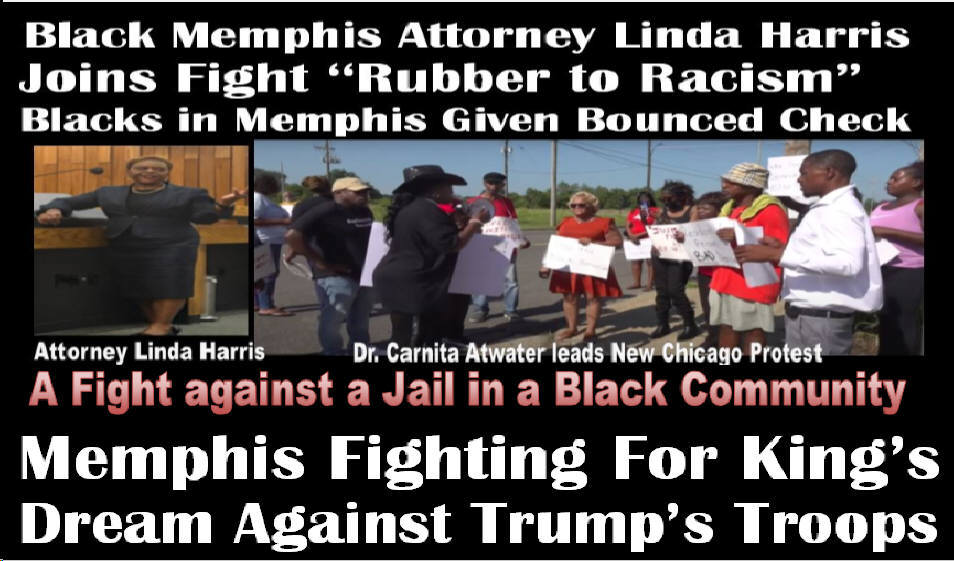
Those who read this news story if you are looking for a quick read this is not the story for you. This news release is just part of a comprehensive story titled "Rubber to Racism." This story began when Black Memphis female attorney Linda Nettles Harris joined the fight against White developer Kemp Conrad proposed putting a 1.25 billion dollar Jail complex in the historic Memphis African/American residential Community of New Chicago.
There is a law called the "Posse Comitatus Act of 1878." This is a federal law that generally prohibits the use of the Army and Air Force for civilian law enforcement within the United States, reflecting a tradition of limiting military involvement in domestic policing. This law restricts military personnel from performing tasks like arrests, searches, and seizures unless specifically authorized by the Constitution or an Act of Congress.
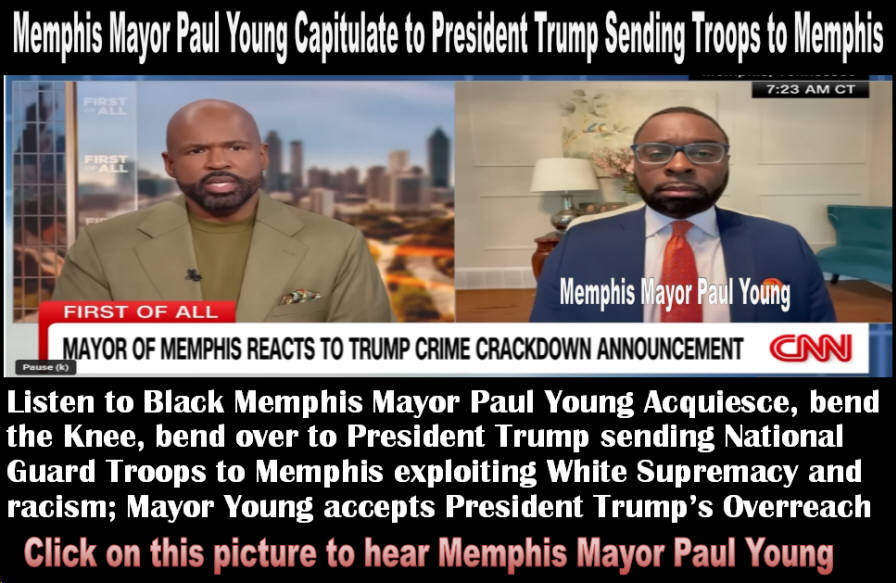
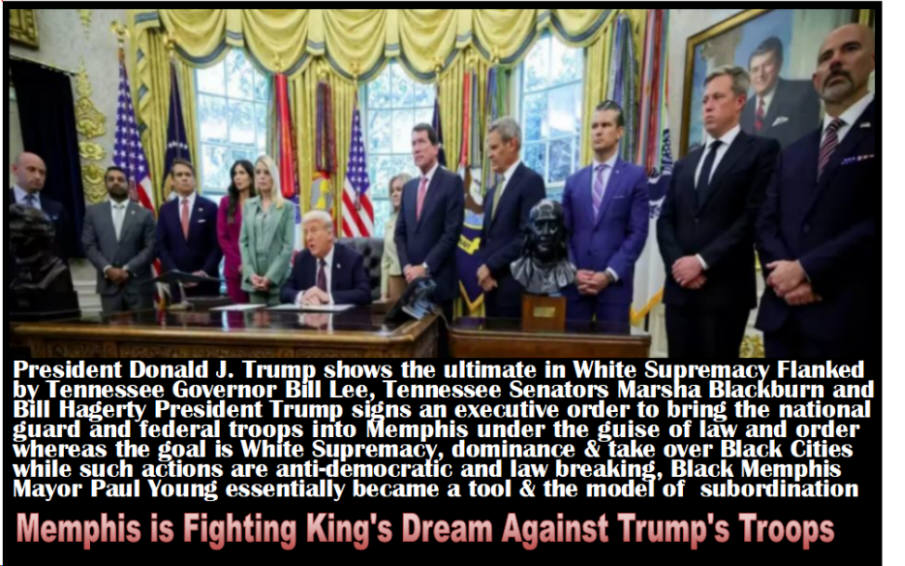
President Donald J. Trump is breaking the law via sending Federal troops to Memphis and Black Memphis Mayor Paul Young is not offering any pushback regarding this "Breaking of the Law."
The 2023 census revealed Memphis as the most populated city of African/Americans in America whereas Memphis is the hallmark of White Supremacy, Racism and Black on Black racism whereas there is a practice and culture of its African/American leaders to obscure, ignore and marginalize its "Black Memphis History." The case in Memphis among some Black Leaders is to not make its White Memphis supporters uncomfortable via bringing up Memphis troubled past.
Memphis was founded for one reason; "Cotton" and its wealth of making Whites rich and Blacks Slaves.
In regards to American President Donald J. Trump, Memphis, Tennessee is the perfect city for President Donald J. Trump to break the law, dominate and show Memphis as a weak and ineffective run city of Blacks and unqualified leaders, whereas Memphis is the perfect city to encourage and inspire MAGA (Make America Great Again).
President Donald J. Trump in sending federal Troops to Memphis is a way to show America and MAGA why Blacks should not operate a city and make Memphis the model and "Whipping boy of White Supremacy whereas MAGA Whites can celebrate Memphis as the City where Dr. Martin Luther King Jr. was killed and White Supremacy emerged via the "Memphis Cotton Museum."
The President in sending of federal troops to Memphis is a symbol of White control, fear and a model for MAGA. While the issue for Blacks Memphis is greater than more federal investment, the issue for Black Memphis is its missing of cultural restoration, and historical justice which is not exemplary of Black Memphis Mayor Paul Young and many Black Memphis leaders who capitulates to "White Supremacy."
It was the Black leader Whitney Young who said: "It better to be prepared for an opportunity and not have one, than to have an opportunity and not be prepared." Memphis, Tennessee is not prepared for the actions of President Donald J. Trump. President Donald J. Trump only respects power and pushback.
Whereas President Trump's role is that of White Supremacist and the "roll back of Black achievement." President Trumps first day in office he rolled back "DEI" or Diversity, Equity and Inclusion."
In Memphis, Tennessee Black leaders missed the point of the historic "Black Liberator Fredrick Douglass who said: "Power concedes nothing without demand, never have and never will." President Donald J. Trump will never concede his power over Memphis Blacks unless Black Memphis leaders stand up to President Trump.
The deployment of National Guard troops to Memphis by President Donald J. Trump echoes a troubling historical lineage that traces back to President Andrew Jackson, widely regarded as the architect of ethnic cleansing in America. President Andrew Jackson's Indian Removal Act of 1830 forcibly displaced tens of thousands of Native Americans many who were Black.

American President Donald J. Trump's decision to send federal troops into Memphis a majority-Black city under the guise of crime control should raise alarm bells about the illegal use of Federal power to create fear, suppress and intimidate communities of color. President Trump wants to make Memphis an example whereas Black Memphis Mayor Paul Young as told by President Donald J. Trump supports the idea welcomes of Troops in Memphis. Mayor Paul Young is a Trump partner.
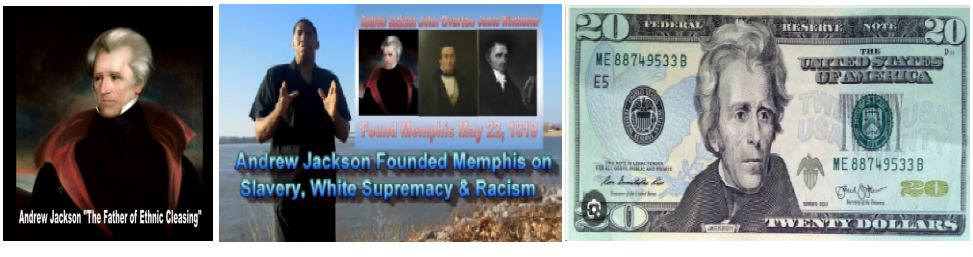
In this context, President Trump's actions in Memphis are not merely political maneuvers; they are part of a continuum of racialized governance that use fear to erase, suppress, and control Black agency.
The very soil of Memphis, once seized through treaties that dispossessed Black Native peoples, now bears witness to a new chapter of militarized intervention-one that demands scrutiny, resistance, and historical reckoning.
When a community honors its past-its struggles, triumphs, builders, thinkers, and everyday heroes-it's not just preserving artifacts. It's affirming identity, values, and continuity. Respecting history means acknowledging who paved the way, who was erased, and who still needs to be seen. It's a moral stance as much as a cultural one whereas many Black Memphis leaders ignore the moral stance to honor and protect "Black Memphis History" whereas a select group of Black Memphis leaders protect "White Supremacy."
This story unknown and untold explains why the Memphis is the Idea City for President Trump and MAGA. The City of Memphis has a "Cotton Museum" and not a specific "Black Memphis History Museum."
The existence of the Cotton Museum at the Memphis Cotton Exchange-a site that once symbolized the economic exploitation of enslaved Black labor-stands in stark contrast to the absence of a "Black Memphis History Museum" dedicated specifically to the full breadth of "Black Memphis history." This isn't just a gap in infrastructure. It's a reflection of what Memphis and its Black majority leaders chooses to elevate, and what these Black Memphis leaders chooses to omit.
In Memphis, Tennessee, there exists a troubling cultural and institutional pattern of obscuring and erasing "Black Memphis history," even as the city owes its very foundation to Black labor, ingenuity, and resistance. This erasure is starkly illustrated by the presence of a Cotton Museum-a space that celebrates the economic legacy of cotton while largely sidestepping the brutal exploitation of enslaved Black people who made that economy possible.
What's missing is even more telling is Black Memphis Mayors: there is no "Black Memphis Museum" or any acknowledgement solely dedicated to the history of "Black Memphis." The city's rich tapestry of Black achievement-from the builders of Orange Mound and "New Chicago to the educators," entrepreneurs, and freedom fighters who shaped its civic life-is left fragmented or ignored. While institutions like the National Civil Rights Museum and the Stax Museum of American Soul Music offer glimpses into Black contributions, they do not center the full breadth of local Black Memphis history.
This selective memory is not accidental-it reflects a systemic "Black on Black Racism" and a systematic effort to sanitize Memphis's narrative, prioritizing palatable symbols like blues and barbecue over the truth of Black self-determination. The absence of a comprehensive Black Memphis History or a Black Memphis History Museum is not just a gap in infrastructure; it is a moral failure and a planned strategy to keep Blacks in Memphis in their place that demands correction. Reclaiming Black history is not merely about remembrance it is about justice, agency, and restoring the rightful legacy of a people who built Memphis from the ground up.

Recently the City of Memphis created a plan of "White Supremacy" whereas the city of Memphis restructured "White Cultural dominance" whereas the City of Memphis spent over 200 million via an unknown and untold plan of cultural superiority a plan of "White Supremacy Dollars" or Memphis minority whites can play volleyball and culturally dominate Liberty Pocket park making it a place for Whites, while neglecting Black Orange Mound just across the railroad tracks.
The flashpoint of this story is "Rubber to Racism." This is the untold story of the Sprawling 71-acre tract in the historically African/American residential community of New Chicago. The 71-acre plot of land in New Chicago where the old Firestone plant once stood stands as the largest undeveloped and most coveted tract of land in the entire City of Memphis-a developer's dream by any measure.
Its sheer size and strategic location makes it a prime target for commercial and residential expansion, with potential to reshape the economic landscape of North Memphis. Such a space has the potential to be the model of Black Achievement Worldwide. Yet despite its allure, the land remains untouched, not because of lack of interest, but because it is surrounded by a resilient community of Black residents who refuse to sell and a racist Black Memphis culture that refuse to develop this land.
The families of New Chicago , many of whom have deep generational ties to the area, represent a living barrier to outside investors-particularly White developers-who view the land as a goldmine but are unable to penetrate the social and cultural fabric that protects it. This tension between speculative development and community preservation reveals a deeper struggle over agency, legacy, and the right to define the future of historically Black neighborhoods.
The neighborhood of "New Chicago" is roughly bounded by North Watkins Street to the East, Chelsea Avenue to the South, Thomas Street to the west, and stretches North to Levee Road at the wolf river.
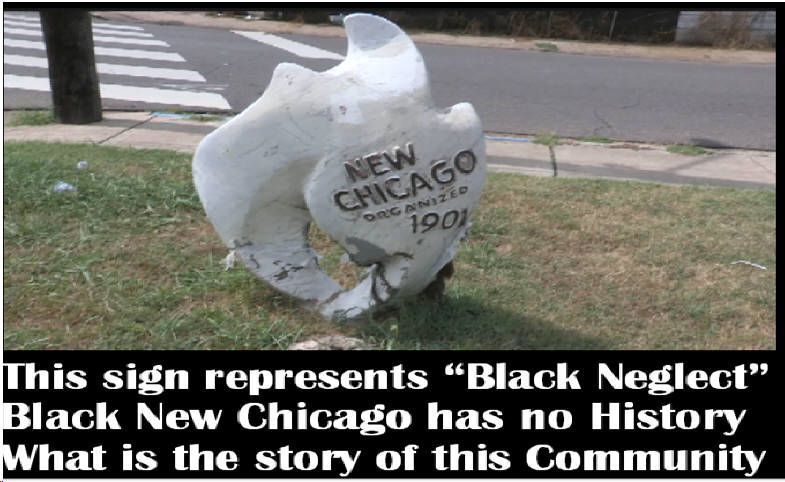
The fact that President Donald J. Trump is putting National Guard Troops in Memphis is an opportunity to share the story of New Chicago; "Rubber to Racism." The Black "New Chicago Community" in Memphis has long served as a working-class enclave rooted in industrial labor, civic pride, and community resilience. There is a sign or a worn sign or marker at Breedlove and Firestone.
The City of Memphis's recent $200 million investment in the former Memphis Fairgrounds now called Liberty Pocket Park stands as a glaring example of institutional exclusion and racial inequity. Marketed as a beacon of youth sports and economic revitalization, the complex has instead become a symbol of "White Supremacy" as how public funds can be weaponized to benefit White communities-particularly those outside Memphis-while bypassing the very Black neighborhoods that built the city's cultural legacy. Volleyball courts and upscale amenities cater to suburban White visitors, positioned just steps from historic Orange Mound, yet designed without regard for its majority Black residents.

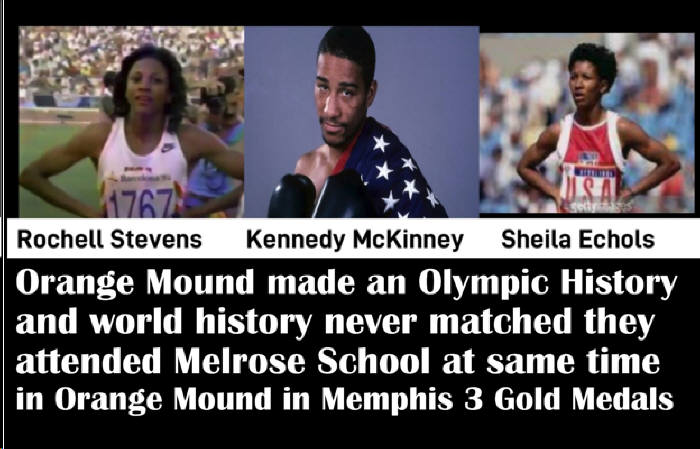
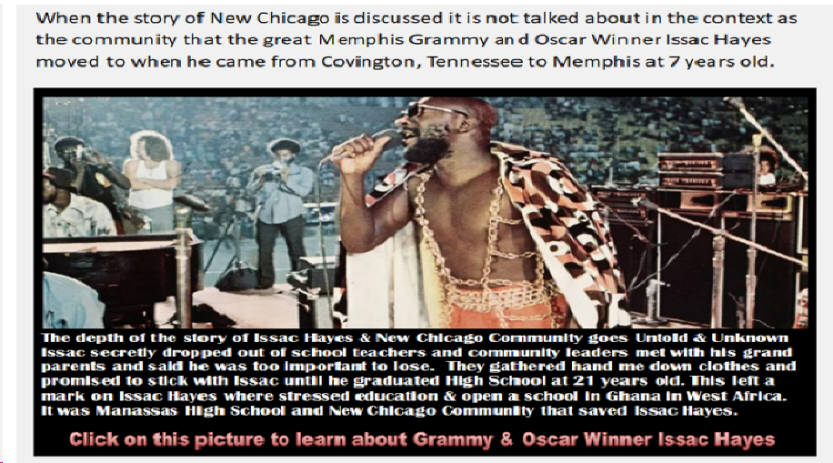
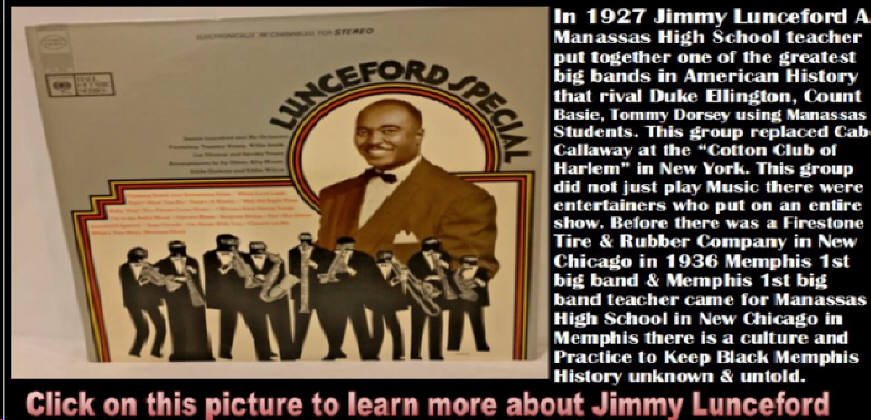
The former Firestone Tire and Rubber Company has come and gone. Before there was a Firestone there was in 1927 Jimmy Lunceford a Manassas High School teacher took Manassas High School put together one on the greatest big bands in American history.
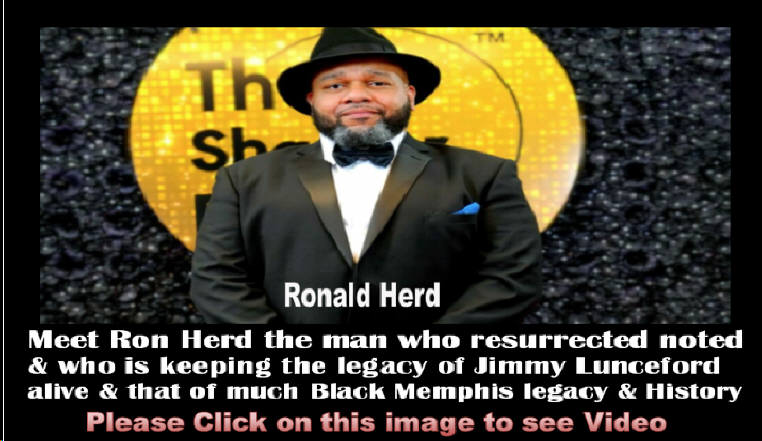
Now, after years of neglect, the site is back in the headlines-not as the future home of jobs, schools, or housing, but as the then proposed location of a $900 million to $1.3 billion jail complex. Where community members protested and pushed back.
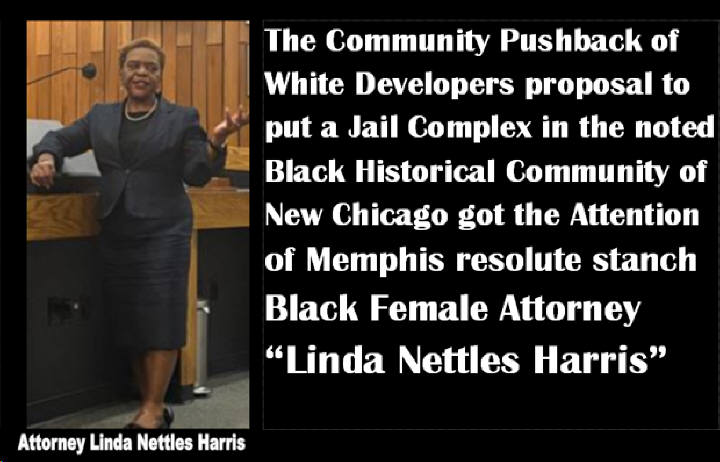
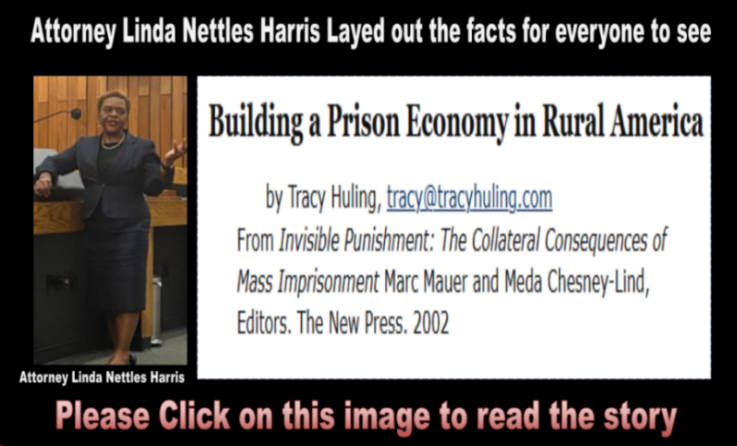
Attorney Linda Nettles Harris was prepared to get into "Good Trouble," just as a laid atop injury, a wound salted with the politics of race and power. Attorney Linda Nettles Harris calls it bluntly: "Rubber to Racism." For Attorney Linda Nettles Harris, the story is not simply about land use or municipal planning, it is about a generational pattern of betrayal and racism. In plain and simple terms there would never be a proposal or even a suggestion to put a Jail complex in a White residential Community in Memphis
Because New Chicago is an African/American Community once home of the "Firestone Tire and Rubber Manufacturing Company" New Chicago was the stage of Memphis White Supremacy, Racism and even "Black on Black Racism via the proposal to build a jail in this residential African American community.
"Dr. King said America gave the Negro people a bad check," Attorney Linda Nettles Harris declares. "In 2025, they are handing us that same insufficient rubber check again-but this time, they wanted paying us in cages." Her cadence sharpens. "And I don't care if you're Black or White-if you support this plan, or if you support putting a jail in a Black residential community, you are complicit in the theft of a community's dignity."
Attorney Linda Nettles Harris embodies a rare depth of experience in Memphis's criminal justice system, having walked the beat as a police officer before ascending through the ranks of legal practice. Her journey began in law enforcement, where she served the Memphis Police Department from 1979 to 1988, gaining firsthand insight into the realities of policing and community dynamics. After earning her law degree from the University of Memphis in 1987, she transitioned into legal advocacy, serving both as a federal prosecutor and later as a defense attorney-a dual perspective that few possess.
Her tenure as an Assistant U.S. Attorney spanned over two decades, during which she prosecuted complex cases ranging from public corruption to civil rights violations. Attorney Linda Nettles Harris' career reflects a holistic understanding of justice: not just the mechanics of law, but the human consequences of its application.
Her platform emphasizes fairness, accountability, and restorative practices, challenging systemic inequities and advocating for reforms like bail elimination for nonviolent offenders and conviction integrity reviews. In every role-from officer to prosecutor to mediator- Attorney Linda Nettles Harris has demonstrated a commitment to justice that is rooted in both experience and empathy.
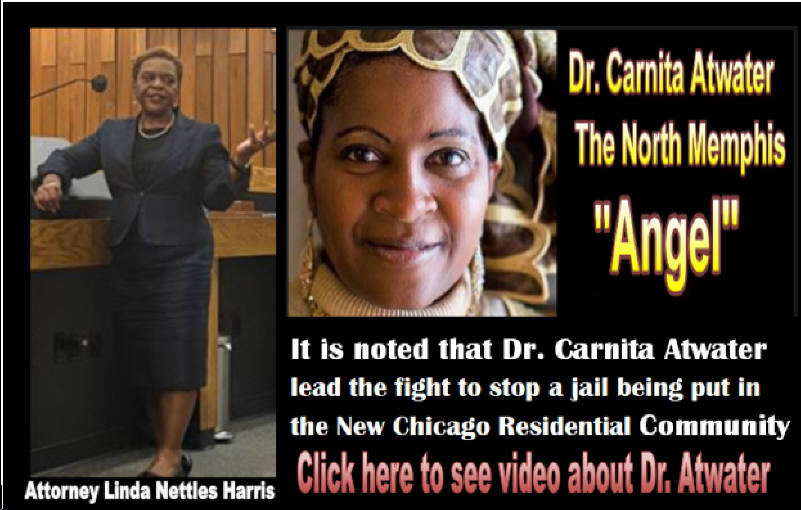
There are many others who joined the fight "Rubber To Racism." Another concerned citizen is Norman Redwing (sometimes spelled Noman) is a pastor in Memphis, TN, affiliated with Good Samaritan Outreach and The Afrikan Village. He founded The Afrikan Village in Memphis after being inspired by The Afrikan Village in St. Louis, and he also leads Good Samaritan Church & Outreach Ministries. Institute, and others have joined the fight.
The question was asked, and an investigation was made regarding the major "Proponents of the plan like former Memphis City Councilman Kemp Conrad." Who is Kemp Conrad and what his background is.
Kemp Conrad was the Chair of the Shelby County Republican Party from 2003-2005. Whereas it is clear that the Republican party supports President Trump and his erasure of DEI whereas President Trump created a war on Black History and what he "Calls Woke Culture." It is the Republican Party that supports President Trump bringing Troops to Memphis whereas; President Trump bringing troops to Memphis its not about crime, but its about Control.
Kemp Conrad current position as Vice Chairman & Principal at Cushman & Wakefield Commercial Advisors LLC, specializing in commercial real estate, particularly the industrial and data center sectors. Kemp Conrad a White male came up with an over billion dollar plan to get his hands on that prime land in that was once the "Old Firestone Tire Rubber Plant." Kemp Conrad touted "job creation" and "economic revitalization as a way to get Blacks to support his Billion Dollar Plan of Profit."
Attorney Linda Nettles Harris laughed at the suggestion Job creation and economic revitalization-not because jobs aren't needed, but because she has seen the same promises dissolve like mist. She says this is "A rubber Check." "What they call jobs, she call it propaganda and dog-whistling."
The notion that placing a jail in a historically Black residential community like New Chicago will lead to "job creation" and "economic revitalization" is a deeply flawed and misleading narrative-one that masks systemic neglect with hollow promises. Prisons and jails are not engines of prosperity; they are symbols of containment, surveillance, and institutional failure.
While a handful of low-wage jobs may be generated, they do not translate into sustainable economic growth, community empowerment, or generational wealth. In fact, the presence of a jail often depresses property values, stigmatizes the area, and reinforces cycles of poverty and criminalization. Advocating incarceration infrastructure as a form of revitalization ignores the root causes of economic distress and diverts attention from real solutions-such as investment in education, housing, healthcare, and Black-owned enterprise.
For communities like New Chicago, which have endured decades of disinvestment and erasure, the promise of a jail as a "revival" is not only empty-it's insulting. True revitalization begins with honoring the humanity, history, and potential of the people, not building walls around them.
The moral geometry of the Firestone site is undeniable. First, Firestone was built including Black labor. Second, when its utility to white-owned capitalism dried up, the plant closed-leaving Black New Chicago to absorb the loss. Third, rather than reinvesting in what was taken, city and county leadership allowed decades of decay. And now, in the fourth act of this bitter play, they proposed to lock the community's very identity inside the shadow of a jail.
"They used Black hands to make their rubber tires," Harris says. "Now they want to use Black pain to fill their cells." Attorney Linda Nettles Harris threw down the gauntlet to Black elected officials. The question that she asks is: "would they in Memphis put a Jail in a White Memphis Community?"
Most important aspect of the decision to build the jail in an African American residential Community are the racial dynamics which are impossible to ignore. Attorney Linda Nettles Harris points to the absence of comparable proposals in white neighborhoods. "Find me a majority-white suburb in Shelby County where a billion-dollar jail is on the table."
Attorney Linda Nettles Harris note "You can't;" They build Whole Foods in those zip codes. They build Starbucks and office parks. Attorney Linda Nettles Harris notes if you want to know what Whites build for themselves in an African American community look at "Liberty Pocket Park" the former fairgrounds whereas the city of Memphis found 200 million dollars so Whites from Southaven, Bartlett and Germantown can come in the heart of Black Memphis right next to Orange Mound and play Volleyball."
That is not coincidence-it's design. Attorney Linda Nettles Harris points out "the proposed jail complex site is surrounded by homes, churches, and -Manassas High School within eyesight of where razor wire and guard towers would rise. Her question to the county was searing: "Would you put this next to the White child's school in Collierville? In Germantown? In East Memphis? No"
Then why was it fine for you to put this next to the Black child's school in "New Chicago?"
Attorney Linda Nettles Harris urges national media to "flip the zip codes" in their reporting. "Write the same story," she dares, "but change New Chicago to Germantown, and change 'jail' to 'luxury prison.' Watch how fast the outrage shifts-suddenly it's unthinkable." White people would be all over these elected officials.
New Chicago residents like Deborah Kofi and Gwendolyn Matthews-Jones amplify her charge. Kofi lamented that billions are earmarked for incarceration but not for resources that strengthen communities. Matthews-Jones is "appalled" by the proximity to Manassas school. For them, this isn't abstract policy, it's the redefinition of their neighborhood's identity, branding it permanently as a place of custody rather than opportunity.
Attorney Linda Nettles Harris calls on every church in Memphis-especially those claiming Dr. King's mantle-to take a public stands and build our in Black residential Communities whereas we can teach Black History. "If your pulpit can't preach teaching Black History and if you are not against putting a jail next to Black Manassas High school, then your sermons are noise," she says. "Silence is a vote for cages in the Black community."
Attorney Linda Nettles Harris notes: "If Shelby county claims this is about efficiency, why would the Shelby County Commission not consider its 2025 Shelby County Jail Need Assessment, conducted by the University of Tennessee. Shelby County Technical Services, which was requested by Sheriff Floyd Bonner." Attorney Linda Nettles Harris states, "The needs assessment presents additional recommendations for the jail, such as:
Option 1
Implementing improvements at the current jail site." She added, "Noteworthy, the needs assessment points out that absolutely no capital improvements have occurred at the current site in recent years. We all know that if we don't make capital improvements to our property, it will deteriorate. This appeared to be intentional neglect, possibly because they want to redevelop the current jail site.
Harris indicated that Option 2
The needs assessment entails relocating the jail and criminal justice complex to Shelby Farms Garden Road, in proximity to Jail East. This is land that is owned by Shelby County verses the land in the New Chicago community is not owned by the county. The red flag is the proposal is that the county will pay a private owner to rent the land on which the jail will be built after the county allows a private developer to make millions of dollars off of the New Chicago jail proposal.-
On September 8, 2025 all Black Shelby County Commissioners voted to remove the residential community of New Chicago from consideration as a jail site. All of the White Shelby County Commissioners; Amber Mills, Mick Wright, and Brandon Morrison all voted in favor of putting a jail in the Black residential community of New Chicago.
Such in Memphis can only be a temporary victory for grassroots resistance-but it also exposed a disturbing silence from Memphis's Black leadership and every candidate vying to become Shelby County's next mayor. In addition all Replicans support President Trump sending Troops to Memphis and building more jails for Blacks.
Attorney Linda Nettles Harris, echoing journalist Susan Adler Thorpe , reminds us that when answers are elusive, you "follow the money." But Attorney Linda Nettles Harris goes further: "you must also examine what was *not* said. In this case, the silence surrounding the jail proposal speaks louder than any official statement."
Dr. Martin Luther King Jr. warned that "Silence is betrayal," and that in the end, we remember not the words of our enemies, but the silence of our friends.
This silence was not limited to current officeholders. It extended to every candidate running for Shelby County Mayor in 2026-**Mickell Lowery**, **J.W. Gibson**, **JB Smiley Jr.**, **Harold Collins**, and **Melvin Burgess
Each of these individuals claims to represent the people, yet none stood publicly against the proposal to place a jail in the heart of a historic Black residential neighborhood. Their absence from the protest and failure to speak out is not just political-it's moral. Leadership is not just about campaigning; it's about showing up when it matters most.
Black Shelby County Mayor Lee Harris on Monday September 22, 2025 signed the resolution not to put a jail in New Chicago. Shelby County Mayor Lee Harris whose administration oversees the jail proposal, remained silent.
What is even worst Black Memphis Mayor Paul Young offered no public resistance for a jail Memphis Mayor Paul Young is partnering with President Donald J. Trump via bring troops to Memphis.
In Memphis it is not known that Black Councilwoman Dr. Michalyn Easter-Thomas, a native Memphian and self-described visionary for community and culture who represents District 7 that is New Chicago. She was nowhere to be found. Her silence, especially as Chair of the Government Affairs Committee, raises serious questions about whether expediency outweighed advocacy.
Shelby County Commissioner Mickell Lowery-whose District 8 includes New Chicago and who now chairs the jail relocation committee-failed to lead when his community needed him most. His vote to remove New Chicago from the list came only after public pressure, not proactive defense.
The Liberty Park development and the New Chicago jail proposal are twin symbols of institutional neglect. Liberty Park was greenlit with over $200 million in public funds, yet it excluded Black Orange Mound residents and its legacy of Black athletic excellence.
Meanwhile, New Chicago was almost nearly burdened with a jail-until Blacks pushback forced a reversal. The common thread is clear: public investments that benefit White interests, while Black communities are left to fight for dignity, representation, and basic resources.
Attorney Linda Nettles Harris points out; "Now is the time to document not just what was proposed, but what was ignored." The silence of elected officials and aspiring leaders must be remembered. Because in Memphis, silence is not just betrayal-it's policy. And the people of Orange Mound and New Chicago deserve more than silence. They deserve justice.
In the heart of Memphis, a battle for truth, dignity, and historical justice has erupted-and its epicenter is the long-erased Black community of New Chicago. Founded in 1901, New Chicago was once a thriving Black neighborhood, home to vibrant businesses, growing Black families, and the first accredited Black high school in Shelby County, Manassas High school.
For nearly half a century, 72 acres of this community powered the world's largest rubber tire manufacturing plant-Firestone Tire and Rubber Company-employing thousands of Black residents and anchoring a proud, self-sustaining economy.
Today, New Chicago has no digital footprint, no mapped boundaries, and no official recognition of its legacy. Its history has been systematically erased by Memphis's White supremacist institutions and compounded by Black-on-Black political neglect.
Attorney Linda Nettles Harris has emerged as a fierce advocate and has joined the fight against this Memphis erasure, launching the "Rubber to Racism" campaign to expose how Memphis weaponized development against Black communities.
The real New Chicago representative is Dr. Carnita Atwater who converted the old Firestone Union Building to a Museum and Cultural Center.
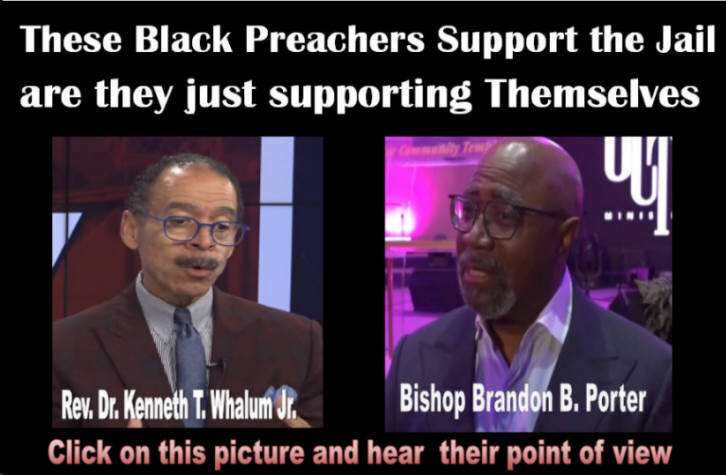
It was not just Whites who wanted to put a jail in a Black residential Memphis Community two prominate Black Memphis preacher went against Black people in New Chicago and advocates putting a Jail in New Chicago. The above video is a "Digital Footprint" that puts Black Preachers beyond Memphis whereas they are not only on the world stage their words will go into the history books as their supporting Jail in the Historic Black residential Community of New Chicago. While the Black Shelby County Commissioners took the building a jail in New Chicago, Black America can meet and hear these ministers for themselves. Dr. Kenneth Whalum boasts that "Criminal Justice is a Growth Industry whether we like it or not".
Ministers Dr. Kenneth Whalum and Brandon Porter who advocates building a jail in a historically Black residential community and frames "criminal justice as a growth industry" is promoting a vision that stands in stark contradiction to the core of Christian teaching.
The Gospel calls for liberation, restoration, and the uplifting of the oppressed-not the expansion of systems that profit from human bondage. To use incarceration as an economic development strategy is to commodify human suffering, perpetuate cycles of poverty, and normalize the criminalization of Black life.
Such a stance ignores Christ's command in Matthew 25 to visit and care for those in prison, not to build more cages for them. It disregards the prophetic tradition of Isaiah 61, which calls for setting the captives free and rebuilding communities with justice and dignity. When a minister aligns with the logic of mass incarceration rather than the ministry of reconciliation, they abandon the moral authority of the pulpit and risk becoming an agent of oppression rather than a shepherd of God's people.
The world should hold such Black ministers accountable, reminding them that true economic growth comes from investing in education, housing, health, and opportunity-not in the machinery of incarceration.
To add insult to injury is the fact that New Chicago has perhaps more Black Churches than any Black Community in Memphis. The question should be asked why these two ministers advocated putting a jail complex in the residential Community whereas the citizens of New Chicago pushed back.
In fact right in the heart of the "New Chicago residential Community" is the "New Chicago Church of God in Christ" located at 1127 Louisville Avenue "pastored by the young Elder Carlos Rodgers" who spoke against the jail being placed in New Chicago differs from Bishop Brandon Porter who says the Jail proposal in New Chicago residential community "can bring some vitality." Listen to the words of Bishop Brandon Porter for Yourself.
In the shadows stood Deidre Malone, former Shelby County Commissioner and CEO of The Carter Malone Group, who represents Kemp Conrad-the developer behind the jail proposal.
Malone's dual role as PR agent for the project and stakeholder in the Tri-State Defender, a legacy Black newspaper, raised serious concerns about conflict of interest and institutional betrayal. The Tri-State Defender remained silent during critical phases of the proposal, failing to mobilize its platform for community defense.
The "Rubber to Racism" website now stands as a digital monument to resistance. It documents not only the legacy of New Chicago but the moral choices made in real time-who stood up, who stayed silent, and who sold out.
This is the unspoken-and deeply revealing-story behind[b] *Rubber to Racism*.[/b] Developer Kemp Conrad and his allies understood that if their plan to build a new jail in New Chicago had been approved, Memphis taxpayers could have been saddled with a staggering $1.25 billion bill.
That figure isn't just a budget line-it's a moral indictment. For the same amount, Shelby County could radically transform Black Memphis: cleaning up neglected neighborhoods, investing in schools, restoring cultural institutions, and creating pathways to economic empowerment. Instead, the proposal sought to criminalize and contain, not uplift and invest.
The fact that the billion-dollar jail was even considered for the historic Firestone site-land that could be a beacon of Black-led development-exposes the priorities of those in power. *Rubber to Racism* shines a light on this injustice, demanding that public funds serve the people, not perpetuate cycles of incarceration and erasure. This is not just about rejecting a jail-it's about reclaiming the future. It is about holding those in power accountable.
The decision by President Donald Trump to send federal troops to Memphis, coupled with the historical actions of figures like Kemp Conrad, reflects a pattern rooted in White Supremacy-where power is imposed without consent, and Black communities are treated as battlegrounds rather than citizens.
Memphis Mayor Paul Young's failure to firmly oppose the illegal and anti-democratic deployment of federal forces represents not just political weakness-it signals a deeper crisis in Black leadership in Memphis. His passive acceptance of this intrusion doesn't just tone down Black resistance; it reinforces a legacy of institutional racism and Black-on-Black complicity, where moments to resist white supremacy are surrendered instead of seized.
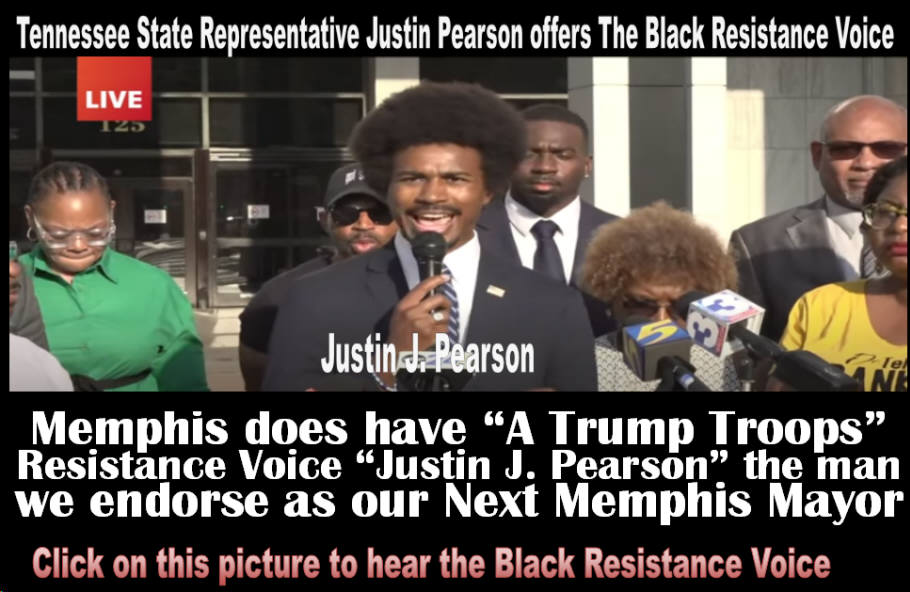
It seems that Black Shelby County Mayor Lee Harris and other Black leaders in Memphis were prepared to stand up to Donald J. Trump, yet Black Mayor Paul Young used his office and authority to suppress and tap down Black resistance. In stark contrast, Black leaders like Los Angeles Mayor Karen Bass and Chicago Mayor Brandon Johnson pushed back hard against Trump's overreach-Bass with public defiance, Johnson with legal firepower.
But Black Memphis Mayor Paul Young gave President Trump the New 21st Century classic "old Negro" routine: scratching his head, bending the knee, and offering a "yessa boss" dance that takes Memphis back to the plantation politics of submission.
While African Americans across the country have shown they can look a white man in the eye and say "Hell no, "Black Memphis Mayor Paul Young welcomed Trump's white supremacist agenda with open arms, playing the role of the "Good Negro." This isn't just a betrayal of Black Memphis-it's a betrayal of Black America. Black Memphis Mayor Paul Young's actions drag Memphis backward, erasing decades of struggle and resistance, and reviving the humiliating legacy of servitude that so many fought to overcome."
In contrast and a rare occasion Shelby County Mayor Lee Harris grew a backbone, who Condemned the militarization of Memphis as anti-American, Black Memphis Mayor Young's silence and submission signals a dangerous normalization of federal overreach and racial injustice. Memphis deserves leaders who stand tall, not those who kowtow to authoritarianism cloaked in law and order. Dr. Martin Luther King Jr. said: "silence is betrayal."